
Table of Contents
ToggleA guide to cleaning mould off car seats
Finding mould on your car seats can feel like the end of the world. While it’s certainly not pleasing to look at, a bit of mould in the interior of your car isn’t the be-all, end-all.
Most of the time, mould in your car is caused by long periods of not using or cleaning it or leaving your car in very humid or damp conditions for a long time.
That juice your kid spilt in the back of the car? Leave it too long to dry or let it keep happening, and you may end up with mouldy seats or carpets in the future. Luckily for you, it’s easy to clean up small patches of mould at home.
We’ll show you how to do just that in our blog.
If the mould in your car has gotten out of control, bring it to us for a deep clean or valet service, and we’ll restore it to a beautiful, clean vehicle.
What causes car mould?
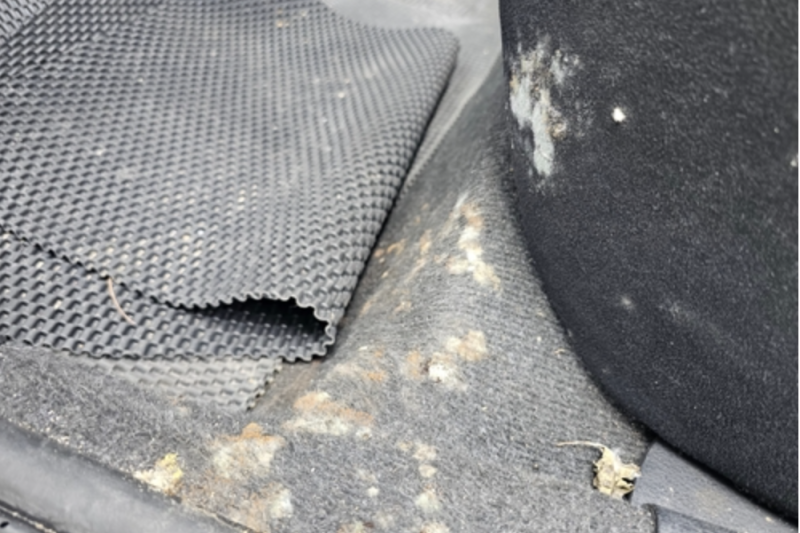
Are you dealing with a horrible, musty smell in your car? If so, you’ve probably noticed a few patches of discolouration on your seats or carpets and speckles of mould.
Mould is a fungus that thrives in damp, poorly ventilated areas, and it can appear as white, green, black, or brown fuzzy patches in the interior of your car.
Mould spores can settle into fabrics, carpets, seat foam, headliners, and air vents, and if it has the right conditions to grow, they can spread quickly. So, here are the most likely reasons you’re dealing with mould in your car:
1. A build-up of moisture
Excess moisture can be from something obvious, like a drink spill, wet shoes, or a damp towel, or something harder to spot, such as a leaking door seal.
If you have fabric car seats, then these can suffer a worse fate as they’re more vulnerable to moisture, since they soak it up like a sponge. Look out for:
- Damp shoes or clothes left in your car
- Spilt drinks soaking into the seats or carpets
- Rainwater that’s got in through damaged seals
- Water that’s collected in the boot or spare wheel well
- A leaking sunroof or blocked sunroof drain
2. Food, dust, and organic debris
Mould needs something to feed on, so inside a car, it most likely goes for crumbs and old bits of food that have fallen down between seats, dust, pet hair, skin cells, and general dirt traipsed in from outside.
This is more likely to be the cause for those who have messy children and pets in their car often.
3. Poor ventilation
Since cars are so small and enclosed, moisture can be trapped inside easily, especially if you’re not using it and airing it out every day.
That’s why a lot of older cars or vehicles that are left sitting idly, not being used, can succumb to moisture growth, especially if they’re left in a damp and dark garage.
Mould is also more common during autumn and winter, when cars are colder, wetter, and less likely to dry out naturally.
4. Condensation from short journeys
Using your car mostly for short journeys can also contribute to mould.
When you get into a cold car, your breath and body heat create moisture in the air. If the journey is too short for the heating or air conditioning to properly dry the cabin, that moisture can settle on windows, seats, and carpets, eventually leading to mould issues.
Is mould on car seats dangerous?
If you spot mould on your car seats, the first thing on your mind is probably whether it’s harmful to your health. Especially if it’s in an area that’s concealed, such as under car seats or carpets, and you think it’s been there a while, and you’ve been breathing it in.
Mould can release spores, allergens, and irritants into the air that may affect health, with the airways and lungs most commonly affected. If there’s only a small patch in your car and you dealt with it quickly, then you may not be affected.
For many people, mould exposure may cause mild irritation, such as coughing, sneezing, blocked sinuses, or itchy and red eyes. If you’re asthmatic, you may notice that you feel wheezy, worsening asthma or allergy symptoms.
While people often worry most about black mould, the truth is that mould is harmful no matter the colour. Colour alone doesn’t tell you how harmful it is, so don’t ignore any visible mould.
If the mould covers a large area, has spread to carpets and seatbelts, or the car smells strongly musty even after airing out, it is safer to book a professional interior clean.
7 steps to removing mould from your car upholstery
It’s safe to remove mould from your car yourself, as long as you wear a protective FFP2 face mask and gloves.
Just avoid mixing cleaning chemicals, and don’t use bleach on car seats, especially on fabric, leather, stitching, and coloured trim.
Step 1: Air out the car
The first thing you need to do is let some fresh air circulate inside your car.
Doing so will help flush out the musty smell and create better airflow before you begin cleaning. It may even be best to just keep all windows and doors open while you do.
Step 2: Vacuum the affected area
Before applying any cleaner, remove loose crumbs, dust, pet hair, and debris from the seats and carpets.
Make sure you use a suitable vacuum with an upholstery attachment or a HEPA filter and work slowly across the seat base, backrests, seams, and headrest. Pay special attention to the most affected areas.
Step 3: Apply a car-safe fabric cleaner
Use a car-safe upholstery cleaner or fabric seat shampoo for fabric seats, spraying it directly onto the seat; just avoid soaking the seats, as it can push mould deeper into the foam and make the issue worse.
For leather seats, use a special leather cleaner rather than a general upholstery shampoo; otherwise, it can dry out, crack, or discolour. Apply it to a cloth rather than directly onto the seat.
For Alcantara or microfibre suede seats, use an Alcantara-safe cleaner sparingly, working it in with a slightly damp cloth, moving the cloth in a straight line; never scrub these seats aggressively or in a circle, as the material is delicate.
You can also use bicarbonate of soda as a home remedy to get rid of mould.
Step 4: Gently agitate the fabric
Use a soft upholstery brush to work the cleaner into fabric seats, using gentle, controlled movements rather than harsh scrubbing to lift the mould away.
When cleaning leather seats, use a soft detailing brush only around seams, stitching, and textured areas, avoiding stiff brushes, scouring pads, or abrasive cloths.
Do the same for Alcantara seats, using a soft brush to work the cleaner into the seat once it’s dry.
Step 5: Blot with clean microfibre cloths
Once you have given the cleaner enough time to work its way into the seat, blot the area gently with a clean microfibre cloth.
Press down and lift away rather than rubbing from side to side, and keep changing the cloth as you begin to remove the mould, so as not to spread it.
Dab down leather and fabric seats with a towel to remove residual moisture and let alcantara seats air dry.
Step 6: Rinse lightly if needed
If your fabric cleaner leaves a residue, use a barely damp cloth to wipe the area again, making sure not to use a damp sponge or wet the area to get rid of any leftover cleaner.
Cleaner residue can attract dirt, so removing it properly helps the seat stay fresher for longer.
Step 7: Dry the seat fully
Drying is one of the most important parts of mould removal because if the surface is left damp, mould can come back, even if the surface looks clean.
To dry fabric seats properly:
- Press clean towels into the seat to absorb moisture
- Leave the doors or windows open in a dry, safe place
- Use a fan to improve airflow
- Use a dehumidifier if the car is parked in a garage
- Park in sunlight where possible
- Avoid using the car until the seats are fully dry
Pay closer attention to seams, bolsters, and the lower part of the seat base, as these areas often stay damp for longer.
How to stop mould coming back in your car
Once you know what causes mould to grow in your car, it’s easy to keep it away.
We’ve simplified things even more for you with a quick checklist of what to do and what NOT to do if you want to protect your car:
- Remove any wet items straight away
- Dry any spills immediately
- Dry floor mats after it’s rained
- Keep your car away from damp or humid conditions
- Don’t leave your car too long without driving or cleaning
- Open windows occasionally to let in fresh air
- Use air conditioning to prevent condensation
- Add moisture absorbers to your car (e.g., silica gel or reusable car dehumidifier bags)
- Keep your seats clean from crumbs, dirt, or old food
Need help restoring your car?
If you just don’t have enough time to clean your car weekly with work and kids, we offer a mobile valet service that cleans your car for you without you having to leave your house.
Just tell us your address and choose a date and time that works for you, and our team will turn up with all of our professional equipment and professional-grade products to give your car the best clean it’s ever had.
We’ll get rid of any musty smells, spots of mould, and dirty stains in just a few hours, so you can enjoy a fresh, beautiful car the same day. Get booked in today so you can cruise in style tomorrow.