
Table of Contents
ToggleHow to keep your car mats clean
When spending a lot of time in your car, driving, eating, and travelling with friends, your car mats end up taking the brunt of the crumbs, dirt, and mud.
Between tracking dirt into your car after a hike and dropping crumbs when parking up to eat after a drive-through, your car mats can harbour lots of bacteria, leading to unpleasant odours and stains.
That’s why keeping on top of them by creating a regular cleaning schedule is important. Today, we’ll run you through how to keep your car mats clean, so you can enjoy a fresh, nice-smelling car year-round.
Want to enjoy a clean car without the work? Book in for a mobile valet with us today!
Why should you keep your car mats clean?
If you’re someone who uses your car for work, such as a taxi driver, or you focus better in a clean environment, then keeping the interior of your car clean is important.
It’s also important for obvious safety reasons, as having random objects move across your floor when driving can become a distraction or cause a safety hazard.
But when it comes to keeping the mats themselves clean, it’s more about the appearance and the impression you want to leave on those who enter your car.
Do you want it smelling awful with hair and muck everywhere, or do you want to smell clean? The purpose of car mats is also to keep the floor of your car safe from mud, so not cleaning the mats defeats their purpose, as the dirt and damp will just start to seep into your actual car instead.
What type of car mats do you have?
Before you go out and buy all kinds of cleaning products, it’s best to know what type of car mat you’re dealing with first, as they come in all kinds of materials.
Not every cleaning product is suitable for every material, and different materials hold dirt in different ways, so what works for one won’t work for another.
Rubber car mats
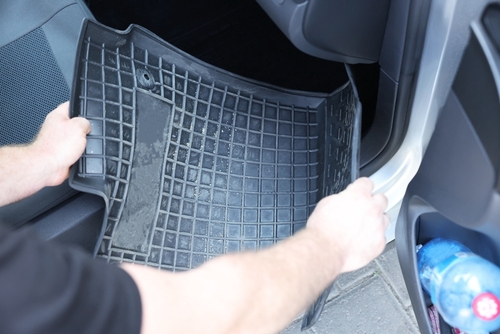
These mats are designed to trap water, mud, grit, and loose dirt before they reach the carpet underneath, so they feature raised edges and textured grooves that make it more difficult to remove dirt.
Carpet car mats
While carpet can make a car feel more comfy, the fibres can trap dust, grit, crumbs, pet hair, and spills deep within the material, making it take longer to clean.
Fabric or velour mats
These look and provide a similar feel to carpet, but they tend to be softer and more decorative than standard carpet mats.
For that reason, they’re more prone to visible wear, staining, and fibres that quickly become flat.
All-weather car mats
All-weather car mats are designed to cope with all types of weather, from rain and mud to harsh UV rays, so they’re usually made from rubber, vinyl, or a flexible synthetic material, and they often have deeper channels than standard rubber mats.
While these channels are useful for catching water, mud, snow, grit and debris, keeping the mess contained, the channels make them more difficult to clean.
A step-by-step guide to cleaning car floor mats
To make things easier, we’ve compiled all of the ways to clean your car mat, depending on what type of material you’re dealing with, in one simple step-by-step list.
Just follow the tips for the material of your car mats to make sure they’re cleaned properly.
Step 1: Remove the mats from the car
Start by taking all the mats out of the car, including the rear mats and boot mat if you have one.
If a mat is badly worn, cracked, or moving around a lot when driving, it may need replacing rather than cleaning.
Step 2: Shake off loose dirt and debris
Give each mat a good shake outside before using products on it. This will let any crumbs and loose dirt fall off, making them easier to clean.
For carpet mats, you can also beat the back of the mat gently to loosen trapped dirt from the fibres. For rubber and all-weather mats, bend them slightly to release dirt from grooves and raised edges.
Step 3: Vacuum both sides of the mats
Once the loose debris has been removed, vacuum the carpet and fabric mats thoroughly to remove dust, sand, and grit from the fibres.
Vacuum in multiple directions to lift as much dirt as possible, paying close attention to the heel area, edges, and any textured sections. Make sure to get the underside too, as dirt and grit often collect there.
Step 4: Choose the right cleaning products
Rubber and all-weather mats can usually handle more water and scrubbing, while carpet and fabric mats need a gentler approach.
- Rubber and all-weather mats: use warm water, a rubber-safe cleaner, and a brush to work into the grooves.
- Carpet mats: use a carpet or upholstery cleaner and avoid soaking the fibres
Always avoid using harsh chemicals, bleach, or strong solvents, as these can damage your car mats.
Step 5: Scrub your car mats
Here’s how to clean your car mats depending on what type of material they’re made from:
Rubber and all-weather mats
- Rinse them with clean water (you can use a pressure washer for this).
- Apply a mild cleaner or dedicated rubber mat cleaner to the mat.
- Scrub the surface with a stiff brush, focusing on the grooves, raised edges, corners and heel pad.
- Once the dirt has lifted, rinse the mats thoroughly until no cleaner remains.
Carpet and fabric mats
- Apply a stain treatment first, letting it sit for a few minutes.
- Spray a small amount of carpet or upholstery cleaner onto stained areas and let it sit.
- Use a soft or medium brush to gently work the cleaner into the fibres.
- For general cleaning, use light, even movements and focus on dirty areas rather than soaking the entire mat.
- Blot the mats with a clean microfibre towel to lift moisture and loosened dirt.
- If you have a wet vac or extractor, use it to remove as much liquid as possible.
Step 6: Dry the mats completely
Never put wet or damp mats straight back into the car, as this can lead to musty smells, condensation, and trapped moisture in the footwell.
You can stand rubber mats upright or lay them flat in a well-ventilated area to dry, while carpet mats should be left somewhere with good airflow and turned over during drying so both sides can dry properly.
Avoid using very high heat to dry your mats, as this can damage the rubber, weaken the backing, or cause the mats to warp.
Common car mat stains and how to deal with them
Got a few stains on your car mats that you don’t know how to get rid of? It happens, but you don’t have to put up with it.
Here are a few common stains and how to remove them quickly:
- Mud: Let thick mud dry first, then brush off the excess and clean what remains.
- Coffee and soft drinks: Blot the stain and use upholstery cleaner on carpet mats and rinse the residue from rubber mats.
- Grease and oil: Use a suitable degreaser or diluted dish soap on rubber mats, and a targeted stain remover on carpet mats.
- Road salt: Use a 50/50 white vinegar and water solution or a dedicated salt remover to remove salt residue.
- Milk, vomit, or pet mess: Use an enzyme cleaner on the stain and allow it to dry thoroughly before using again.
When should you replace your car mats?
If your car mats no longer fit properly, move around while driving, or have started to break down, they may stop doing their job effectively.
If the driver’s mat slides forward, bunches up, or shifts around while you’re using the pedals, replace it immediately to avoid any accidents while driving.
For those who have rubber mats, look out for any cracks or splits, as they can allow moisture to seep into the original carpet beneath, which can reduce traction when driving on wet roads.
How to stop car mats getting dirty so quickly
We get it: when you use your car every day, it’s almost impossible to keep it clean, especially when you have children and pets.
Although there are a few simple things you can do to keep your car mats cleaner for a longer stretch of time that won’t cost you a lot of money or take long to implement. Here are a few to start you off:
- Knock off any mud from your shoes before getting in.
- Keep a pair of fresh shoes for everyone to change into after a walk.
- Add a small car bin to your car for rubbish.
- Use boot organisers or trays to place belongings neatly in your boot.
- Switch to rubber mats in winter as an extra layer of protection when the weather gets wetter.
- Make it a habit to vacuum your car mats regularly to stop dirt from piling up.
- Invest in some fabric protectors for carpet mats (avoid slippery coatings on driver-side rubber mats).
Can you put car mats in the washing machine?
It’s normal to assume you can just pop your car mats into the washing machine and save yourself a job.
However, the heat, spinning motion, and amount of water in a washing machine can damage the backing, make the carpets curl at the edges, or weaken the fixing points that keep them in place.
Once the anti-slip layers are damaged, it can be dangerous, as the driver’s mat may shift or catch on the pedals. They can also soak up too much water, making them difficult to dry.
Book a professional car clean today
Keeping your car mats clean at home can make a big difference, but some mess needs a deeper clean.
If your mats are heavily stained, smell damp, are covered in pet hair or have months of built-up dirt sitting in the fibres, a professional car clean can save you time and help restore your car to what it once was.
Book a professional car clean with Car Cleaning Experts today, and we’ll come straight to you! Our team will leave your vehicle looking and feeling much better inside.